

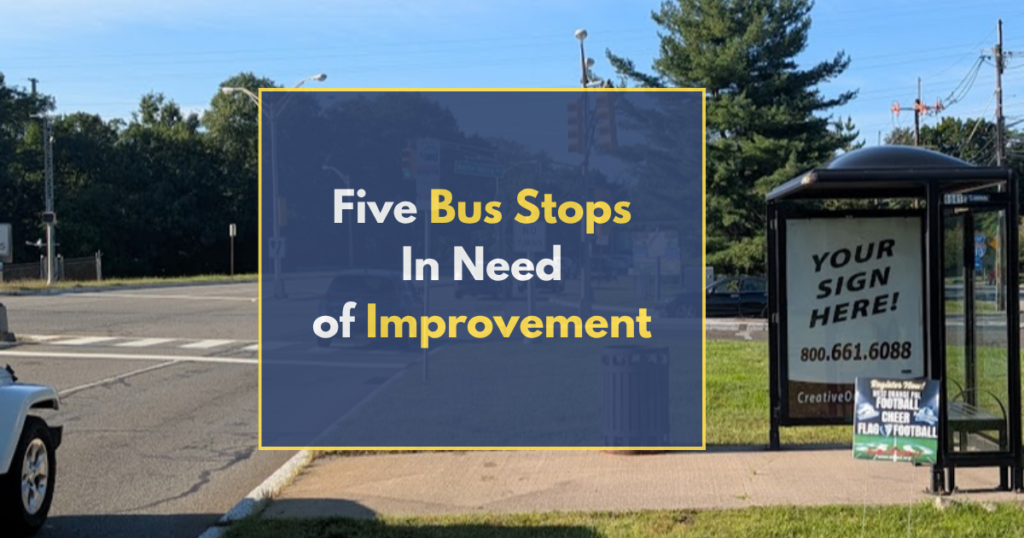
If you use a car to get around, bus stops might be invisible to you. But I pass them every morning – along with the people who use them – when I’m out for my run.
There are lots of ways that our streets fail pedestrians and cyclists. But there are also problems for people who use public transit. I’ve come across several bus stops that just seem to make no sense in their current configuration.
But whether they’re designed properly or not, people use them. And the result of our failure to build proper infrastructure around these bus stops is that people often take dangerous risks just to get to or from work.
Today, we’ll take a quick tour around town and look at five bus stops that could use some specific improvements. This isn’t an exhaustive list by any means. But you’ve got to start somewhere.
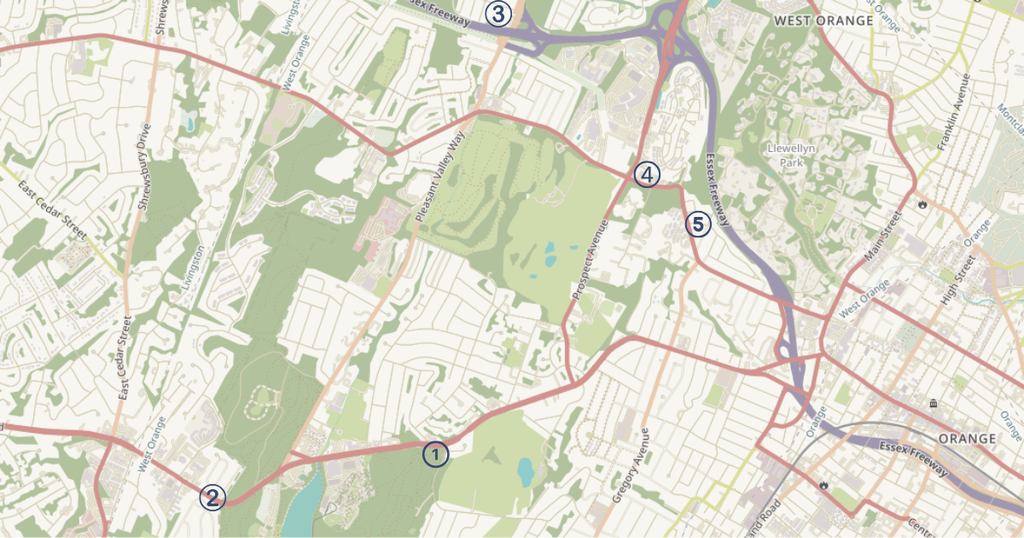
Rock Spring Ave and Northfield Ave
We’re going to start here because this bus stop is at the end of my block and I pass it literally every day.
As is usually the case, there are two companion bus stops. The one on the westbound side of Northfield Ave delivers people to the area from Newark Penn station and other points east. In the morning, it drops off employees at Tutor Time. In the evening, it drops off commuters from New York. This stop is great. It lets out on to a sidewalk and people can walk directly into the neighborhood.
The problem is the other bus stop on the eastbound side of Northfield Ave.
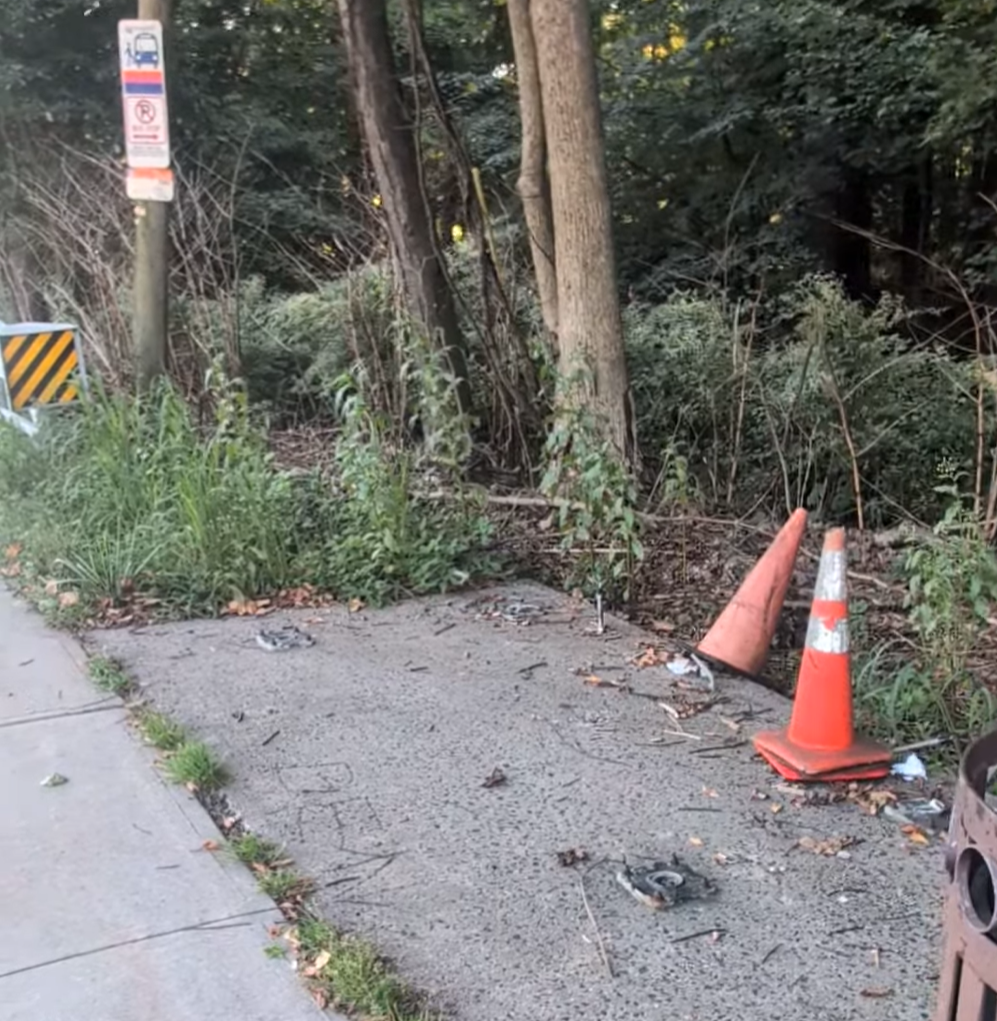
First, the bus stop used to have a bus shelter. At some point in the last year or two, that bus shelter got damaged. I don’t remember if it was a car accident or something else. But it’s no longer there and it has never been replaced. The concrete pad is still there as a reminder of what used to be.
Second, there’s no good way to get here. Most of the people who use this stop come from Rock Spring Avenue or further into St. Cloud. There’s no crosswalk to get to the south side of Northfield. Even if you went out of your way to walk up to Walker Road, that intersection is poorly designed. There’s a crosswalk from the southeast corner of the intersection that connects to the northeast corner. But that pad does not connect to a sidewalk in either direction.
This does come just after a curve that people often take too fast. But still, there should be a crosswalk here.
Why? Because people cross there anyway. A crosswalk with flashing indicators would at least warn drivers that there might be pedestrians there – and encourage them to take things slower.
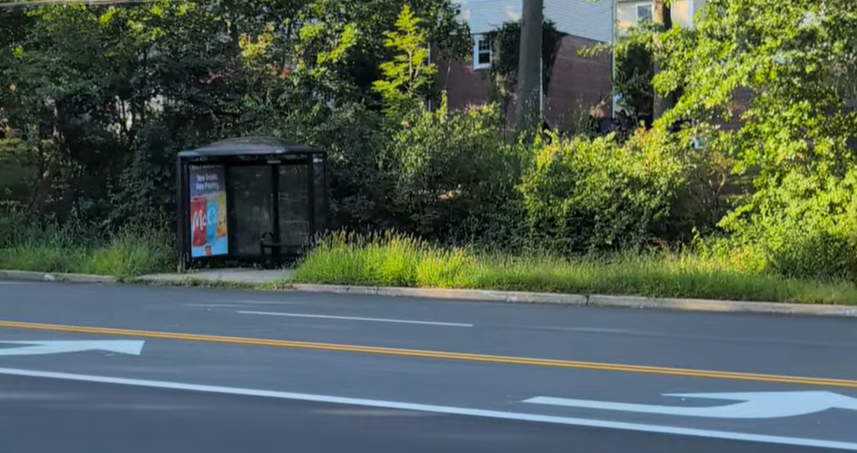
Woods End / Aspen Road at Northfield Ave
Next up is the pair of bus stops futher down Northfield Ave at Woods End Road and Aspen Road.
I noticed this one day as I was running up Northfield towards Livingston. I saw a guy walk out of Korwel Circle and dart across to the bus stop on the other side of the street.
Again, there are two companion bus stops. Depending on which street you live on, you’re able to walk directly to the bus stop in the morning or the evening. But assuming you come home in the opposite direction from which you leave in the morning, you’ll find yourself on the wrong side of Northfield once a day.
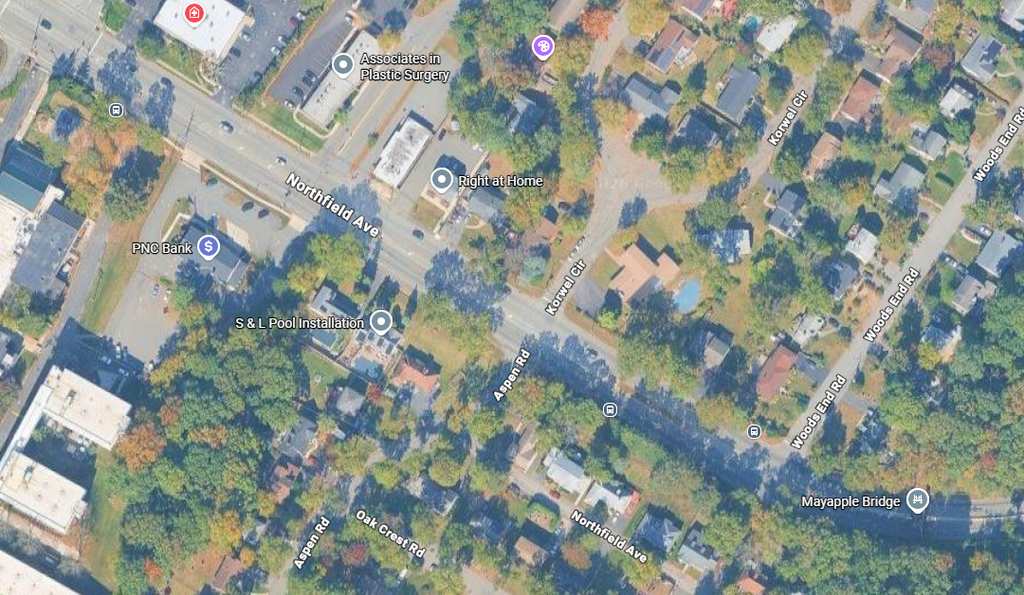
The addition of a crosswalk across Northfield at Aspen Road would be a big improvement.
The other issue is that the bus stop does not have a sidewalk. If you walk out of Aspen Road, you have to walk across the grass to get to the concrete pad on which the bus shelter sits. The grass here is often over grown, so in reality people end up walking in the street.
Finally, there’s no sidewalk on the westbound side of the street, either. So getting to and from the bus stop near Woods End also requires walking through the grass. This side is at least not overgrown, but it’s still problematic if you happen to be in a wheelchair.
This area could definitely use a crosswalk and a pair of sidewalks.
Pleasant Valley Way and I-280
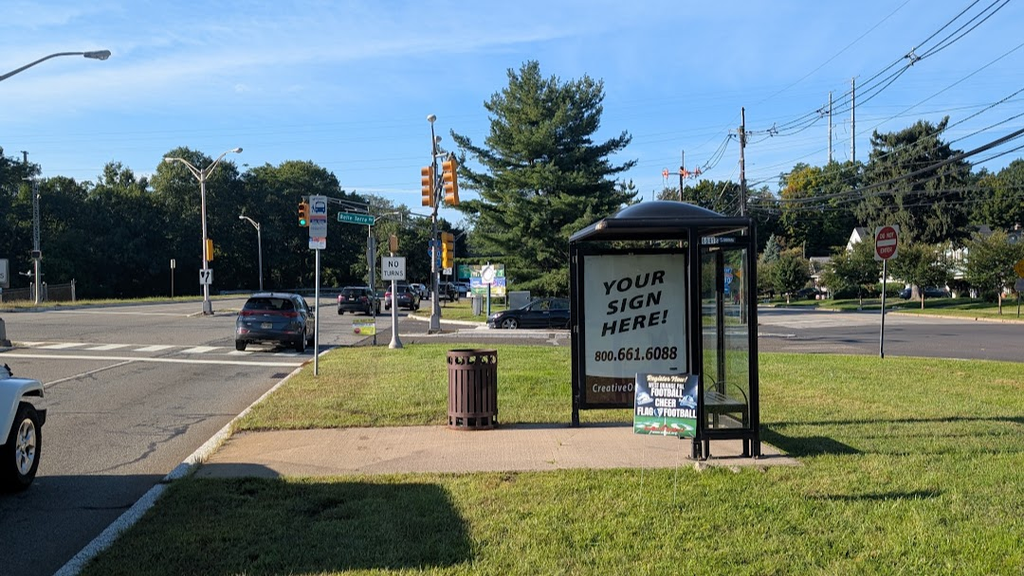
Next up is the bus stop on the southbound side of Pleasant Valley Way near the northern end of the I-280 interchange. I pass this bus stop frequently, and it makes no sense to me.
There’s a crosswalk from the opposite side of Pleasant Valley Way. But that crosswalk literally terminates at the grass. It doesn’t connect to either a) the concrete pad with the bus stop or b) the sidewalk that’s on the other part of Pleasant Valley Way.
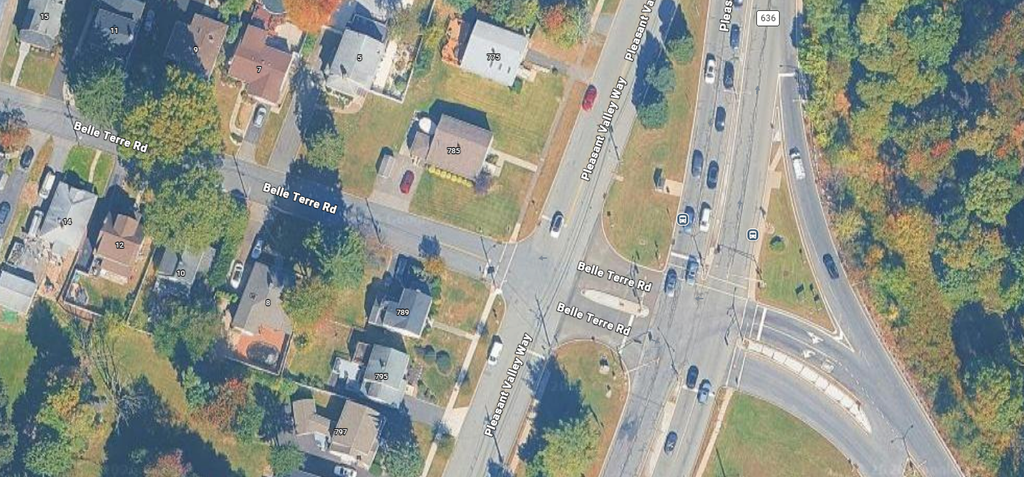
This bus stop is literally on an island of grass, in between two streets. It’s completely disconnected from anything. If you’re in a wheelchair, you can’t safely get there from the neighborhood up Belle Terre Road. Nor can you get there from the opposite side of Pleasant Valley Way.
The solution? The island should have sidewalks and a crosswalk to connect it to the sidewalks on the far west side of Pleasant Valley Way.
Mount Pleasant Ave and Ridge Road
Next up is the pair of bus stops at Mount Pleasant Ave, between Ridge Road and Prospect Ave. This is another example of a bus stop on an island in the middle of nowhere.
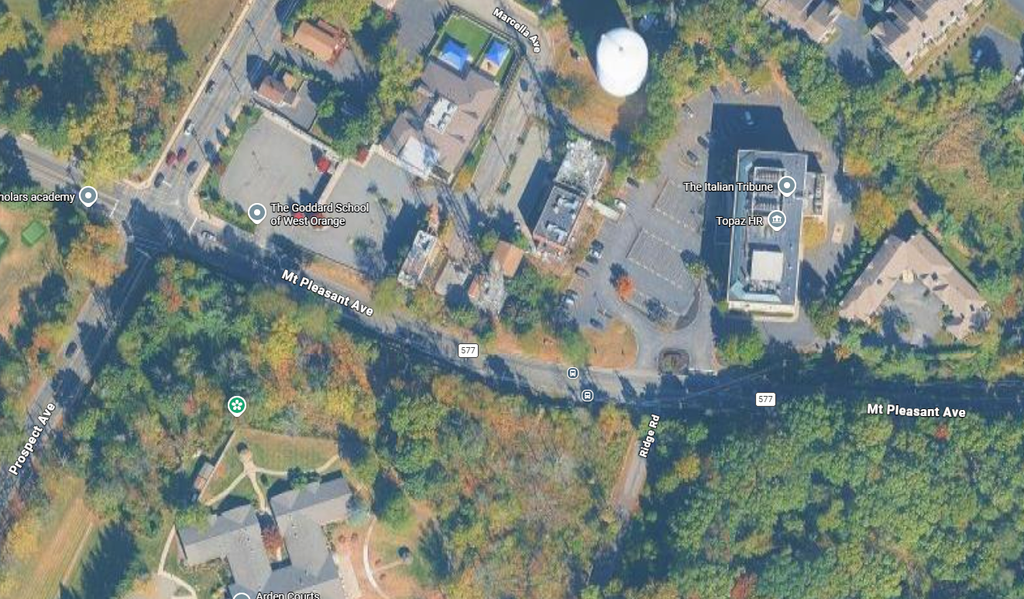
The bus stop on the eastbound side has a sidewalk that reaches the corner with Ridge Road. But there’s no ADA curb ramp and the sidewalk doesn’t extend west towards Prospect.
The bus stop on the westbound side is just posted there in the dirt on the side of the road. There’s no sidewalk at all – towards the office building or towards Prospect. Even if you wanted to either a) walk to Prospect Ave to cross or b) take the next stop on Prospect Ave, there’s no sidewalk leading back to this area on Mount Pleasant.
This area is calling out for a crosswalk and some ADA curb ramps to help people get from one side of the street to the other.
Crest Ridge Apartments on Mount Pleasant Ave
Follow Mount Pleasant east and south a bit and you come to our last stop – the bus stop directly outside of Crest Ridge Apartments.
On the southbound side of Mount Pleasant, there’s an entire apartment complex. It has a bus stop directly outside, which is great. There is the minor detail that there is no sidewalk leading out of the complex to the bus stop. But we’ll ignore that for now.
The bigger problem is that there’s no way to get to or from the other side of Mount Pleasant Ave.
Let’s assume you come or go from the bus stop on the southbound side of the street. That means your return trip will be on the northbound side of the street. To get to or from that bus stop, you’ll need to cross a busy, four lane road without a crosswalk.
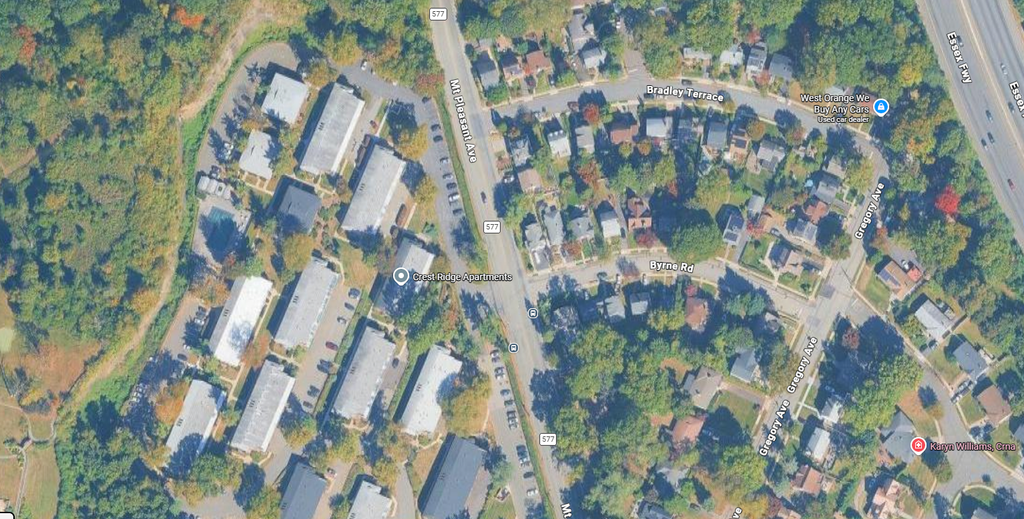
To make matters worse, this road is only four lanes in this one particular section. South of Gregory Avenue, it’s only two lanes. As you approach the curve to the north, it goes back to two lanes.
Widening the street here encourages cars to go faster at the exact point where people need to cross.
This area is a good candidate for a) a crosswalk and b) a road diet. This section of Mount Pleasant should have one travel lane in each direction and, potentially, a turning lane in the middle.
Small Changes Can Make a Big Difference
Each of these bus stops has a small problem with accessibility. It’s missing a sidewalk and/or a way to safely cross the street.
It would only take a minor investment to fix up any one of these bus stops. But it would make a huge impact for the people who use them every day.
You might look at some of these areas and dismiss the idea of a sidewalk because the street is too busy or because visibility approaching the area is poor. But let me remind you that this is all the more reason to install a crosswalk with flashing indicators. Whether the crosswalk exists or not, people will cross the street to get to the bus stop. We need to design the environment around them to make it safer to do so.
This isn’t an exhaustive list of problem areas. There are plenty of other bus stops that may require additional crosswalks and/or sidewalks. They also require additional attention in the winter time, when the area is covered in snow.
These are examples of the small quality of life issues that we can and should be paying close attention to. They’re small projects that have a meaningful impact on people’s day to day life. And with each small investment, we make West Orange a little brighter.
If you know of another bus stop that needs some attention, use this contact form here to get in touch. I’m keeping a list so that I can continue to make targeted improvements over the next four years.